
This industry growth has also paved the way for the emergence of a new generation of winemakers. It’s particularly encouraging to note the increasing representation of black winemakers within this cohort.
One shining example is Ntsiki Biyela, a celebrated woman winemaker who emerged from humble beginnings in rural Mahlabathini, KwaZulu-Natal. After completing high school in 1996, Biyela spent a year as a domestic worker before earning a scholarship to Stellenbosch University.
In 2003, she obtained a BSc in Agriculture (Viticulture and Oenology), eventually becoming the winemaker for the boutique winery Stellekaya. Inspired by Californian winemaker Helen Kiplinger, Biyela launched her brand, Aslina Wines, in 2016. She later produced a wine for The Winemakers’ Collection in France and now serves on the board of the Pinotage Youth Development Academy.
For her transformative role, Biyela received the Diversity and Transformation Award at the prestigious 2021 Wine Harvest Commemorative Event.
Joining this transformative wave are the Rangakas, owners of M’hudi Wines. Purchasing a farm in Stellenbosch in 2003, they became the first black family to own a wine farm in South Africa. M’hudi Wines, synonymous with quality and sophistication, has garnered international acclaim and expanded to markets in the UK, US, and West Africa.
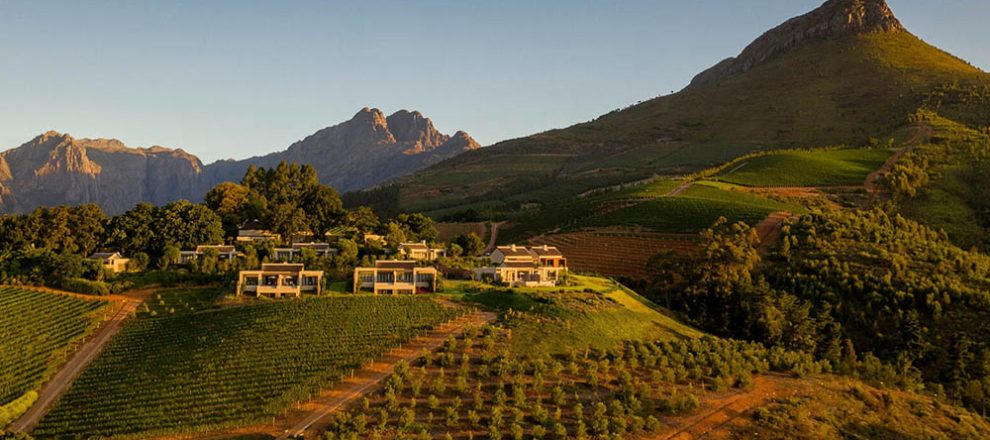
The established wine estates of the Cape Winelands, including Boschendal and L’Ormarins Estate in Franschhoek, Signal Gun and Meerendal Wine Estate in Durbanville, and Webersburg Estate in Stellenbosch, continue to anchor South Africa’s wine tourism. The South African Wine Tourism Visitor Research Report for 2022 highlights Stellenbosch, Durbanville, and Franschhoek as the most visited wine routes.
These estates offer various experiences, including tours, while food pairings are gaining popularity. Waterford Estate pairs wine and chocolate, Clos Malverne offers an Ice Cream and Wine Pairing, and Villiera Wine Estate collaborates with Roses Artisanal Delicacies for a Cap Classique and Nougat Tasting.
Beyond the Cape Winelands, the Midlands Meander route in KwaZulu-Natal introduces Abingdon Wine Estate, a unique single-vineyard boutique wine producer.
Wine tourism contributes significantly to South Africa’s economy. In 2019, before the impact of Covid-19, the sector contributed R7.2 billion to the country’s GDP and supported 36,000 job opportunities.
The industry’s responsiveness to sustainable practices is evident through initiatives like the Integrated Production of Wine (IPW), a voluntary sustainability scheme established in 1998. Ethical trade accreditations and partnerships with WWF-SA Conservation Champions further demonstrate the commitment to ethical, environmentally friendly, and regenerative farming practices.
South Africa’s wine industry weaves a rich tapestry of tradition and innovation, cultural heritage, and environmental sustainability.**